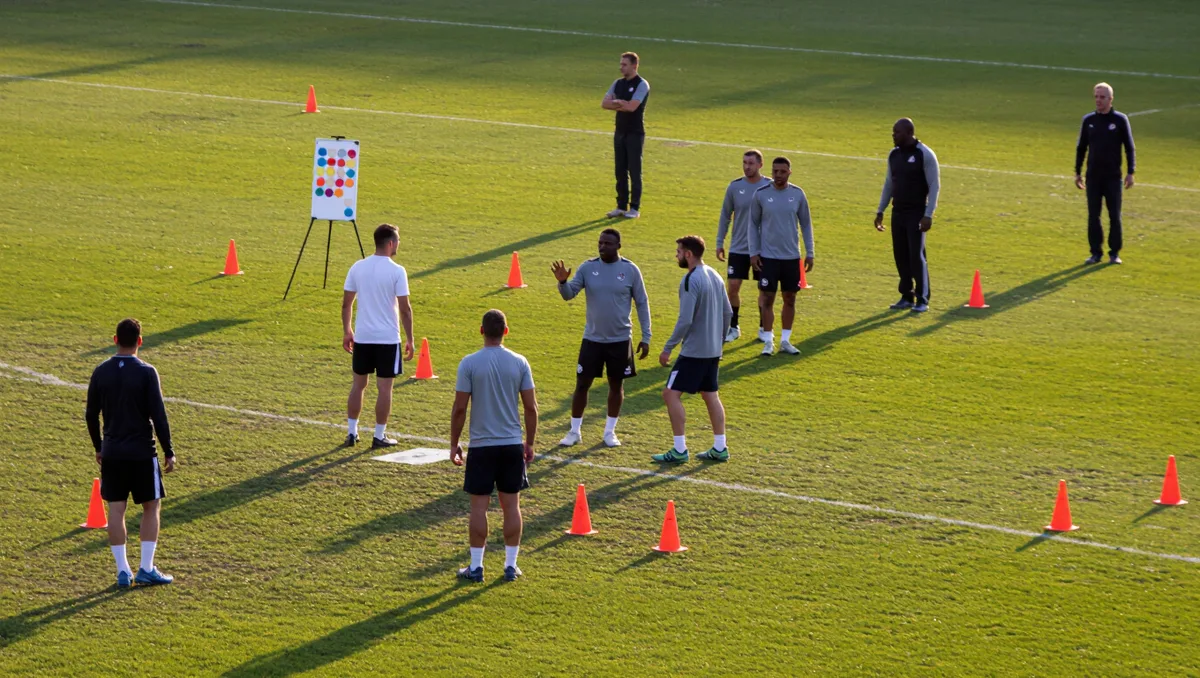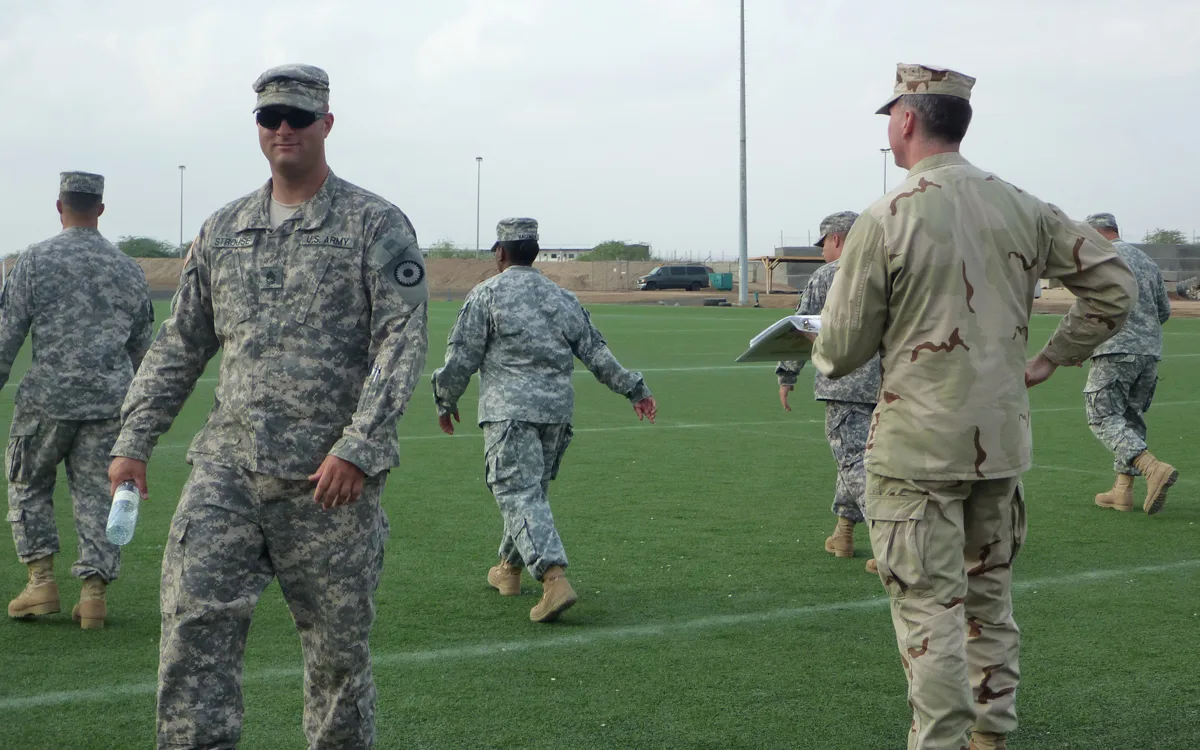
What happens at training camp is mostly measurement, teaching and attrition. Teams gather their roster, run physical and skill testing to establish a baseline, install systems through repeated practice sessions, and then evaluate everything in scrimmages or preseason games until cuts are made. The glamour is the highlight reel; the work is a schedule of testing, drilling, film and fatigue management.
The popular image is two-a-days and vomit buckets. The modern reality is more bureaucratic and, honestly, more interesting. Camp is a compressed hiring process run by strength staff, coaches and medical teams, where every session produces data and every data point feeds a decision about someone's job. For related coverage, see Strength Training Basics Every Beginner Gets Wrong.
As Wikipedia's overview of training puts it, training means developing skills, knowledge or fitness toward specific useful competencies, with the goal of improving capability and performance — and physical training often aims at peaking at a particular time. That is camp in one sentence: a scheduled attempt to peak exactly when the season starts, while deciding who belongs in the room.
Why does camp start with testing instead of tactics?
Because coaches need a baseline before they can build anything. The first days are usually a physical intake: body composition, strength and movement screens, aerobic tests, sometimes sport-specific measures like sprint times or jump heights. Nothing tactical happens until the staff knows what condition everyone reported in.
The testing serves two audiences at once. Coaches use it to spot players who arrived underprepared, which is a professional red flag even when nobody says so out loud. Medical and performance staff use it to calibrate the early weeks, because loading a deconditioned athlete the same way as a ready one is how soft-tissue injuries happen in the first fortnight.
There is a third, quieter function: accountability. A number recorded on day one is hard to argue with later. Players know this, which is why the serious ones arrive already at or near playing condition and treat camp as a proving stage rather than a fitness program.
What does an actual camp day look like?
Longer than fans imagine, and duller. A typical day stacks a morning meeting and walkthrough, a main practice session, individual skill work, treatment and recovery blocks, an evening film session, and curfew. The walkthrough — walking through plays at half speed with no contact — is where a lot of the real teaching happens, because mistakes are cheap there.
The main session usually follows a rhythm: individual drills by position, small-group work, then full-team periods where the installed material gets tested against live opposition. Coaches script these periods in advance. Every rep is assigned, every player knows which unit he is with, and the depth chart is visible in who runs with the first group.
Between sessions is where the modern camp has changed most. Recovery is scheduled, not improvised: sleep monitoring, nutrition planning, and structured cooldowns are standard at the professional level. Our analysis: the teams that treat recovery as programming rather than a reward are the ones whose late-camp practices still look sharp. We covered a connected angle in Why Sleep Became the New Recovery Frontier for Pro Athletes.
How do roster battles actually get decided?
Less by one breakout performance than by accumulation. Coaches keep running notes on execution, effort in special-teams or support roles, coachability, and reliability across consecutive days. A spectacular scrimmage helps, but a player who practices well every day for three weeks usually beats the one who flashed once.
Evaluation happens in layers. Position coaches grade their own group. Coordinators grade within the system. The head coach and front office weigh the whole picture, including contract status and long-term needs, which is why a training-camp battle is never purely sporting. A veteran on a guaranteed deal can survive a mediocre camp that would cut an undrafted rookie.
Preseason games or intersquad scrimmages are the public evidence, but they are the tip of the ledger. By the time cuts are announced, the decision has usually been close to made for days. The surprise cut that shocks fans rarely shocks the building.
Why does camp feel harder than the season?
Because it compresses months of installation and conditioning into a few weeks, and because everyone is being graded simultaneously. In-season, a team fixes one or two things per week. At camp, a new system, a new conditioning base, and a new hierarchy all have to be built at once, under a schedule that front-loads volume.
Good staff manage that load deliberately. Early blocks carry the biggest physical demand, then volume tapers toward the first competitive fixture so players arrive fresh rather than merely tough. The idea of peaking for a set date is standard in physical training, and camp is where that plan either holds or falls apart. When it falls apart, you get the infamous camp injury cluster — too much, too soon, for too many bodies at the same time.
The mental load is real too. Players are learning a playbook, a new social environment, and an evaluation system where every rep is scored. Veterans describe camp as a grind of repetition; rookies describe it as a job interview that never stops. Both are accurate.
What this means for how you watch camp
Practical steps for reading camp coverage without getting fooled:
- Watch the first-team reps, not the stat lines. Who runs with the starting unit is the most honest depth chart available.
- Distrust single-day highlights. Camp evaluation is a three-week moving average, and one spectacular clip is noise.
- Notice the recovery weeks. When practice intensity drops late in camp, that is scheduling working, not softness.
- Remember the business layer. Cuts balance performance against contracts, roster rules and future needs.
The gates keep out more than cameras. Behind them is a hiring process wearing a whistle — testing, teaching, loading, cutting — repeated every year until the roster fits. That is the whole show.