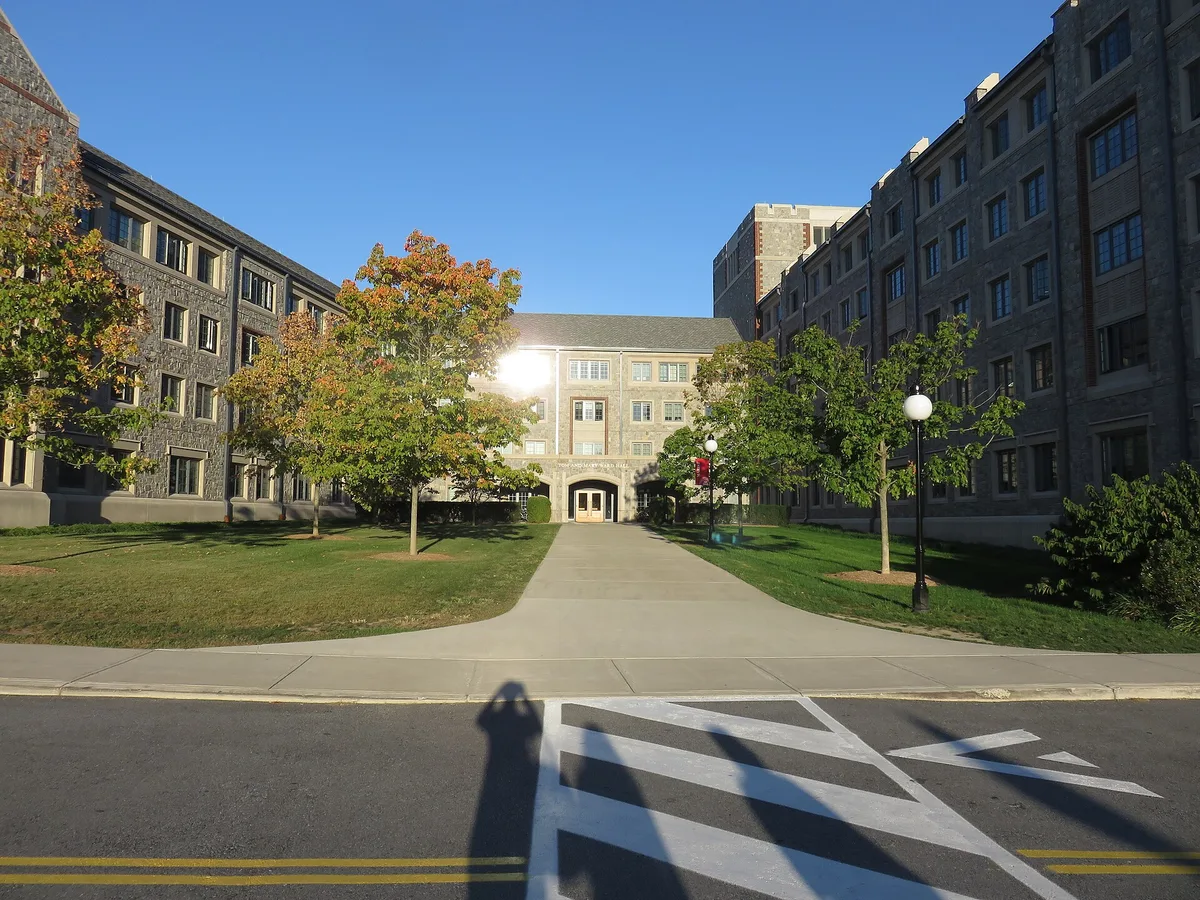
Nineteen Marist cross-country runners made the Metro Conference's 2026 All-Academic Teams — 12 from the men's side and seven from the women's, per the school's own announcement. That is the news. What it actually measures is something more interesting than a certificate count.
All-academic teams get treated as participation trophies in college sport, and sometimes they are. But the bar here is not trivial: a student-athlete needs at least two semesters at the institution and a cumulative GPA of 3.20 on a 4.0 scale to qualify, according to Marist University Athletics. Nineteen people clearing that bar at once means the standard is not being met by a handful of outliers. It is being met by the roster.
That is the analytical point. A single brilliant semester tells you about one student. Nineteen sustained GPAs across two semesters or more tells you about a program's habits — recruiting, scheduling, and the culture that sits underneath both. This is the quiet end of athletes coverage, where nobody gets a transfer portal rumor, and it is usually where the durable programs are built. We covered a connected angle in How Do Athletes Get Scouted? The Real Path From Small Town to Big Stage.
Why does the men's number — 12 — stand out?
Twelve men's selections is the headline within the headline. The release lists the men's honorees with their majors, and the spread is worth reading closely: biomedical sciences, computer science (in a five-year BS/MS track), finance, human biology, history, communication, digital media, business administration and games and emerging media. These are not soft-schedule majors parked next to 6 a.m. mileage. Biomedical sciences and human biology, in particular, are lab-heavy degrees that do not bend much around a training block.
The class mix matters too. The men's list runs from sophomores to seniors — Chase Kober and Isaac Gross and Miles Chamberlain and Sanjith Nomula among the younger names, Jackson Borge, Raffi Buchakjian, Matthew Ferreri, Pierce Francis, Dennis Love and Ryan Wisker as upperclassmen. When both ends of the class ladder clear the GPA bar in the same season, the habit is being passed down rather than performed once. That is the pattern you want if you are a coach, because it survives graduation.
What does the women's list of seven tell us?
Seven women's selections is a smaller group, and the honest reading is that we do not have the comparative context — the release does not state how many women's runners Marist has on the roster, or how the seven stack up against other Metro schools. What the list does show is a senior-heavy core: Mallory Holloway, Rachael Turek, plus graduate student Emily Litke, alongside juniors Edy Livingston and Julia Zydanowicz and sophomores Evelyn Hoak and Abigail Kowalczyk. A graduate student qualifying is a small detail that says something: she has kept the academic standard across every year of eligibility she has used.
One quirk in the source is worth flagging rather than papering over. The release is headlined as a Metro Conference announcement, but its eligibility line refers to the MAAC All-Academic Team. We cannot resolve that naming discrepancy from the document itself, so treat the honoree names and the GPA threshold as solid, and the conference label as what the school's release says it is.
Why should a fan care about an all-academic team at all?
Because it is one of the few program-level signals that cannot be inflated by one recruit. Results on the course swing on two or three runners having a good day. A GPA threshold does the opposite: it is a floor, not a peak, and floors reveal depth. Twelve men clearing 3.20 while training for a distance season is a roster-management outcome as much as an academic one — it means the coaching staff has built a schedule where both things fit, or recruited people for whom they fit.
There is also a career-arc argument. Most of these runners will not run professionally. The majors on the men's list — finance, computer science, biomedical sciences — are the raw material of second acts, and the athletes who plan them well tend to be the ones who treated the degree as a real credential, not a compliance requirement. We have written before about how the real second careers after sport get built, and lists like this one are where that preparation is visible years early. For related coverage, see What Do Athletes Do After Retirement — What Retired Champions Do Next: The Real Second Careers.
What is the honest limit of this analysis?
Two limits, stated plainly. First, we do not know the denominator: without roster sizes, 19 selections cannot be converted into a percentage, so comparisons to other programs would be guesswork. Second, an all-academic team measures grades, not performance — it says nothing about how any of these 19 ran this season, and this article does not pretend otherwise. The number survives a second viewing as evidence of program culture. It does not survive as evidence of anything else.
What it establishes is this: Marist cross-country, on the evidence of its own release, runs a program where the academic floor is high and broadly held, across genders and across class years. The next useful signal would be next year's list. If the sophomores on it — Kober, Gross, Nomula, Hoak, Kowalczyk — are still clearing the bar as seniors, the culture claim hardens into a trend. Until then, 19 is a strong single data point, honestly earned and correctly labeled as exactly that.