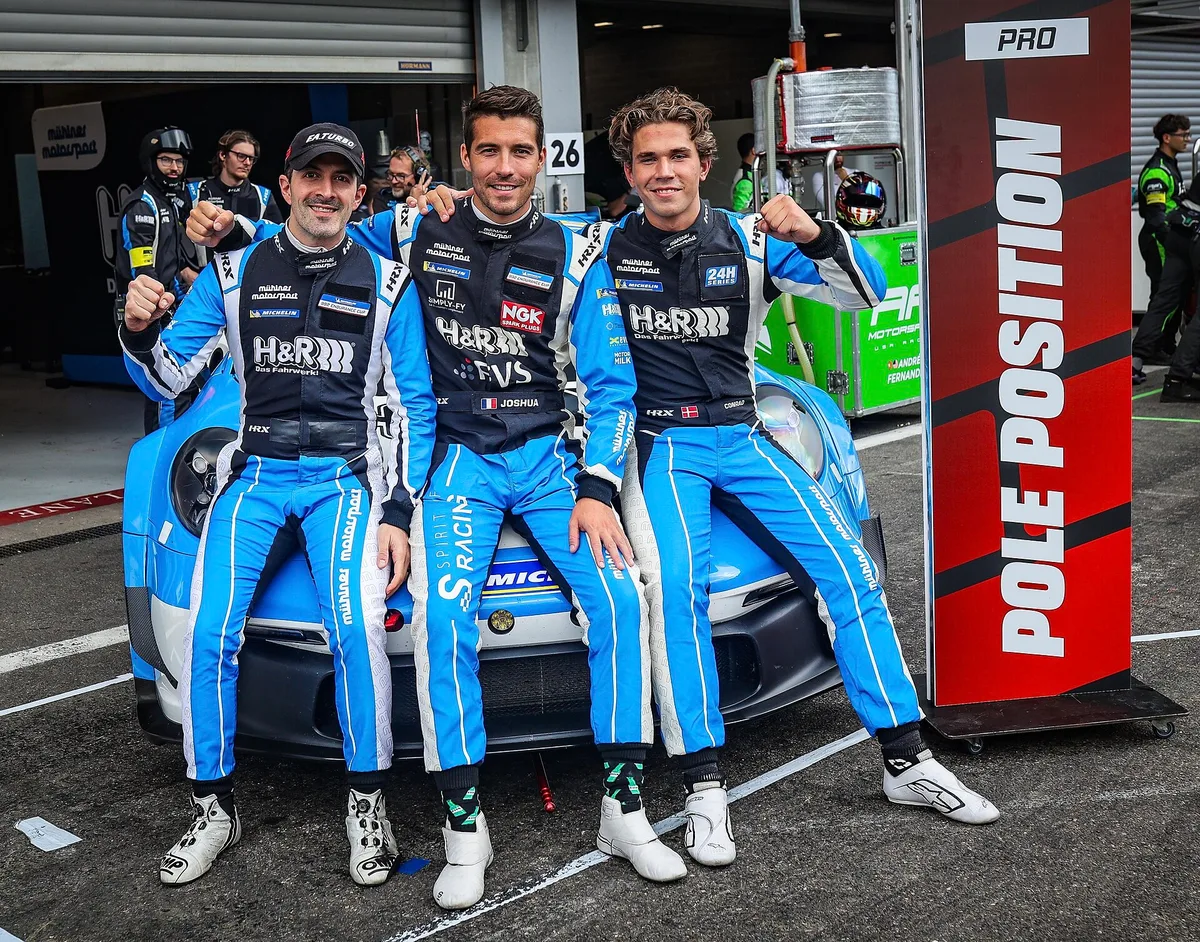
Endurance improves the same way for almost everyone: you run, ride, or swim most of your training at an easy pace, you do it consistently for months, and you add a small amount of harder work on top. That's the whole method. The mistake beginners make isn't laziness. It's running every session at a medium pace that's too hard to be easy and too easy to be hard.
As Wikipedia's overview of endurance puts it, endurance is the ability to exert yourself and stay active for a long period, and training intensity is commonly measured through heart rate, with easy aerobic work landing well below your maximum. The practical takeaway for anyone wondering how to improve endurance is this: slow down on most days, and let the harder days actually be hard.
What does 'aerobic engine' actually mean?
Your aerobic system is the machinery that turns oxygen into steady energy. It covers the heart, lungs, blood, and the muscles' ability to use that oxygen. When people say someone has a big aerobic engine, they mean that machinery can support a fast pace for a long time without the athlete falling apart.
Wikipedia's entry notes that the metabolic adaptations to endurance exercise include a slower drain of muscle glycogen and blood glucose, a greater reliance on fat for fuel, and less lactate produced at any given effort level. In plain terms: the trained body sips fuel instead of guzzling it. That's why a trained runner can hold a pace that would break an untrained person in ten minutes.
None of this happens quickly. Aerobic adaptation is slow, measured in months, not weeks. That's a feature, not a flaw, because it means the work you put in keeps paying out long after the session ends.
Why is zone training everywhere all of a sudden?
Zone training just means sorting your effort into buckets. The buckets have different names depending on who's counting, but the idea is stable: a big share of your time goes to very easy work, a small share goes to hard work, and the murky middle gets used sparingly.
The easy zone has a real definition. Wikipedia's endurance entry describes best results for extensive endurance work in a range between roughly 55% and 65% of maximum heart rate, with intensity tracked via heart rate. For most people, that feels almost embarrassingly slow. You should be able to hold a conversation in full sentences. If you can't, you're not in the easy zone, whatever your watch says.
Why does easy work matter so much? Because it builds the aerobic base without piling up fatigue you can't recover from. Hard intervals send a stronger signal, but they also cost more, and the cost has to be paid in recovery. A beginner who does everything hard is always tired and never adapts. A beginner who does most things easy adapts week after week.
Our analysis: the hardest skill in endurance training isn't pushing. It's holding back.
How do you build a base without getting hurt?
Start with time, not speed. Pick three or four sessions a week you can actually sustain, and make most of them conversational-pace work. The classic beginner error is a six-week burst of heroic training followed by a shin splint and a month off. Consistency beats intensity, every time.
Increase gradually, then hold. A common rule of thumb is to raise your weekly volume in small steps and then sit at the new level for a few weeks before pushing again. We won't print a specific percentage here, because the right step size depends on your history, your body, and what the rest of your life looks like. A former college runner and someone starting from zero should not climb the same ladder at the same speed.
Keep some strength work in the mix. Wikipedia's entry carries a useful caution: endurance training on its own can reduce endurance strength unless you also do resistance training to counteract it. Two short strength sessions a week, focused on legs and trunk, protect the machinery that does the moving.
And respect recovery. Sleep is when adaptation actually happens; the session is just the request. If you want the deep version of that argument, we've covered why sleep became the new recovery frontier for pro athletes, and the logic applies just as hard at the recreational level.
What should a hard day look like?
A hard day is short, structured, and genuinely hard. A simple pattern: a thorough warm-up, a block of repeats at an effort you could hold for maybe 20 to 40 minutes if asked to, with easy spinning or jogging between them, then a long cool-down. The exact count and length of the repeats should match your sport and current fitness. One hard session a week is plenty for a first year of training.
The point of the hard work is to raise the ceiling. The easy work raises the floor. You need both, but in that order of emphasis: floor first, ceiling second. If your hard days stop feeling productive, the usual culprit isn't the intervals. It's the easy days that stopped being easy.
What this means in practice: when in doubt on any given Tuesday, go easier than planned. The training log rewards the person who shows up four hundred times, not the one who went to the well twenty times and spent the other days wrecked.
How long before you actually feel fitter?
Weeks for the first hints, months for the real thing. The first changes are mostly in how effort feels: the same pace stops costing what it used to. The deeper changes, the fuel-sparing, lactate-sparing ones Wikipedia describes, build over a season of consistent work. That's why base building is measured in blocks of months, and why a single brutal week proves nothing.
Track simple things. A steady-pace loop you repeat, and the heart rate or effort it takes. When the same loop gets easier at the same effort, your engine is growing. That's a better signal than any single race result.
One honest caveat from the persona of anyone who's trained seriously: progress is not a straight line. You'll have flat weeks and worse weeks. The athletes who improve long-term are the ones who don't panic during the flat ones and don't celebrate the good ones by doubling everything.
What this means for your next block of training
The evidence here supports a plain plan. Most of your training easy enough to talk through. A little of it hard enough to matter. Some strength work to hold the structure together. Enough sleep and food to let the adaptation land. Patience measured in seasons.
If you want to see how these principles play out at the sharp end, our piece on how marathoners train on fewer miles than the old gospel preached shows elite athletes making the same trade-off: quality over quantity, recovery as a training tool. And for the broader context of how training thinking keeps evolving across sports, the rest of our training coverage follows the same thread. This connects to our earlier piece, How Marathoners Train on Fewer Miles Than the Old Gospel Preached.
The endurance engine isn't mysterious. It's just slow, and it only answers to people who show up consistently and don't rush it. Do the boring work. The races take care of themselves.