NIL deals rewrote college roster building by doing something the NCAA spent a century preventing: paying players openly. Since July 1, 2021, when the NCAA's interim policy allowing name, image and likeness compensation took effect amid a wave of state laws, every roster decision in major college sports has carried a price tag. Then in June 2025, Judge Claudia Wilken approved the House v. NCAA settlement, letting schools share revenue directly with athletes — with a per-school pool of roughly $20.5 million annually starting in 2025-26 — and college sports formally became what recruiting insiders had already built: a professional league with homework. Between those two dates, roster management stopped being coaching and became cap management.
What Did the NIL Era Actually Change First?
Recruiting timelines and leverage flipped within two seasons. Before 2021, a recruit's compensation was a scholarship and a facilities tour; after the interim policy, collectives — booster-funded groups bundling NIL deals for a school's athletes — became the primary bidding mechanism, and transfer portal windows became free agency. The NCAA's own interim framework was deliberately hands-off, so enforcement of pay-for-play boundaries was effectively nil in practice, which meant the market set the rates: starting quarterbacks and elite edge rushers commanded the largest collectives' deals, sometimes reportedly seven figures, while walk-ons negotiated in hundreds. Coaches discovered their new job description included cap-table conversations, because a roster's NIL budget now determined which players you could afford to keep — the portal era's cruelest lesson arrived when programs lost starters not to playing time but to a rival collective's offer.
What Is the House Settlement, Exactly?
A roughly $2.8 billion resolution of antitrust claims — led by former Arizona State swimmer Grant House and others — that compensates athletes for prior NIL limits and, more consequentially, restructures the future: schools in the settlement may now pay athletes directly from athletics revenue, sharing up to about $20.5 million per school per year beginning in the 2025-26 season, a figure set to escalate annually. The settlement also replaced scholarship limits with hard roster limits — football rosters capped at 105, with every spot countable — and opened the door to schools funding full scholarships across the roster. The immediate side effect was a cull: programs across sports cut athletes in spring 2025 to fit the new roster math, a genuinely new and grim ritual in a system that once prided itself on four-year opportunities.
How Do Coaches Build Rosters Now?
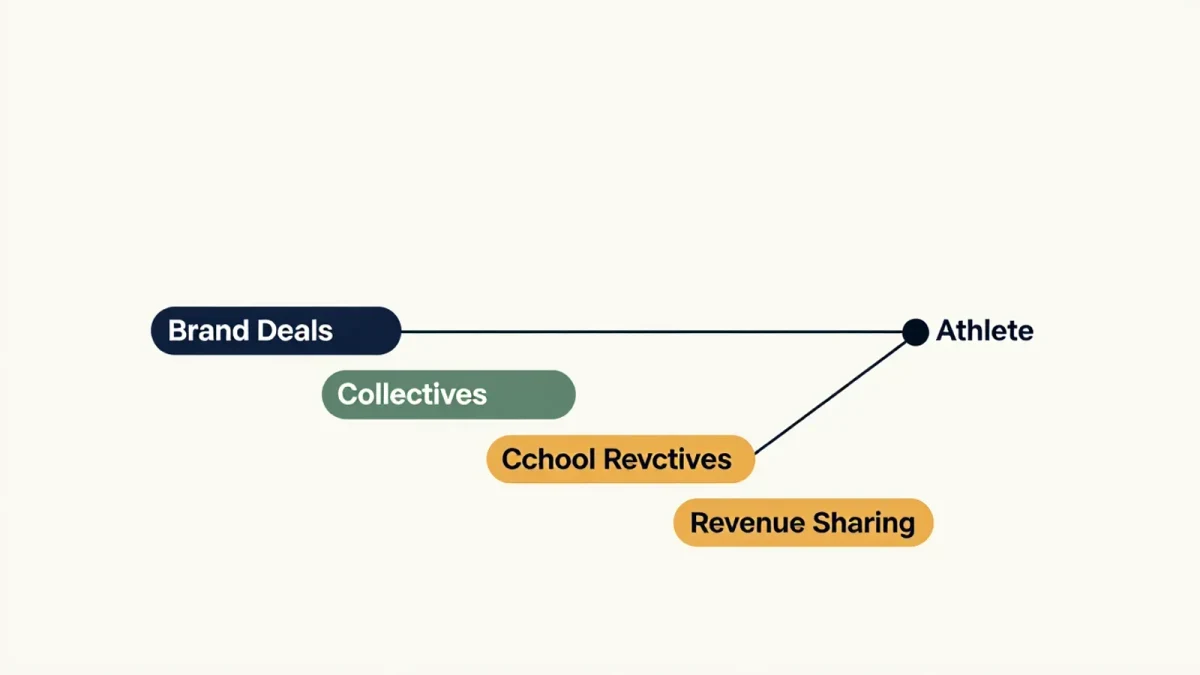
Like general managers, mostly badly, at first. The modern cycle runs: high school recruiting for cheap developmental talent, the transfer portal for immediate needs at market price, and retention payments to keep your own starters out of the portal — athletic departments built general-manager positions and NIL-focused staffs that barely existed in 2021. Budgets allocate across three buckets: the House revenue-sharing pool, NIL collective deals outside it, and traditional scholarships, with compliance teams policing the boundary between them under the settlement's enforcement regime, which includes a new independent enforcement body for NIL-related violations. The strategic consequence is a competitive inversion: the same ten or fifteen brands that always won recruiting now win payroll, and the mid-majors that survived on development lost their edge — why develop a quarterback for three years when a power-conference school can buy him after his redshirt freshman season?
Did NIL Fix Anything for the Athletes?
For stars, unambiguously yes: players who once generated millions for their schools now capture a share — from seven-figure quarterback deals to the Olympians who turned college eligibility into actual sponsorship careers, something the old rules banned outright (see the UFC-scale endorsement portfolios gymnasts and swimmers began signing after 2021). For the median athlete, the picture is murkier. Most NIL compensation flows to football and men's basketball, and the House settlement's roster limits took away roster spots that walk-ons previously held, trading a broad-but-thin benefit system for a narrower, richer one. Title IX litigation over revenue-sharing allocation began almost immediately after approval. The athletes won the right to be paid; the distribution fight is the next decade's war.
Is There a Salary Cap in College Sports Now?
Functionally, yes — several stacked on top of each other, none called that. The House pool caps what a school can share directly; NIL collectives operate above it under looser rules; the settlement's enforcement apparatus polices fake NIL — deals that pay for nothing but enrollment. Schools now behave exactly like capped professional franchises: front-loading, back-loading, structuring multi-year deals, cutting underperforming contracts. The NCAA's remaining role is contracting, which is why the next CBA-style negotiation over revenue-share percentages, portability and termination guarantees feels inevitable. The amateurism model did not collapse in 2021 — it was already legally dead. NIL just forced the funeral, and roster building is now conducted entirely in the language of the world that replaced it.