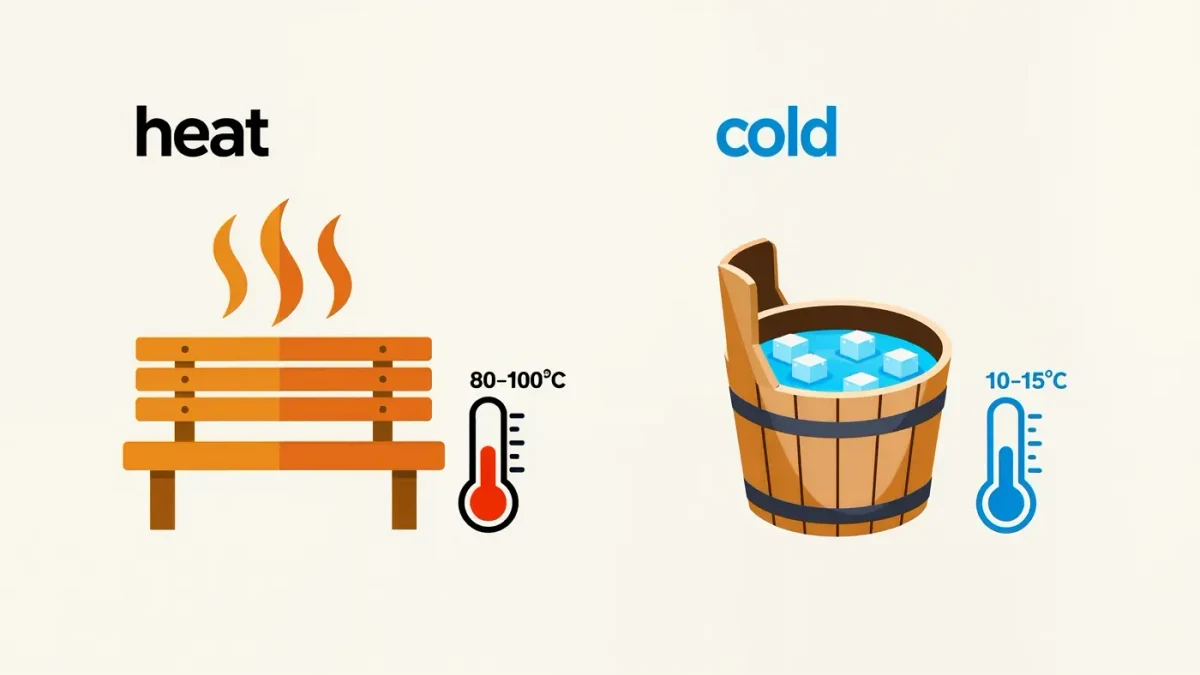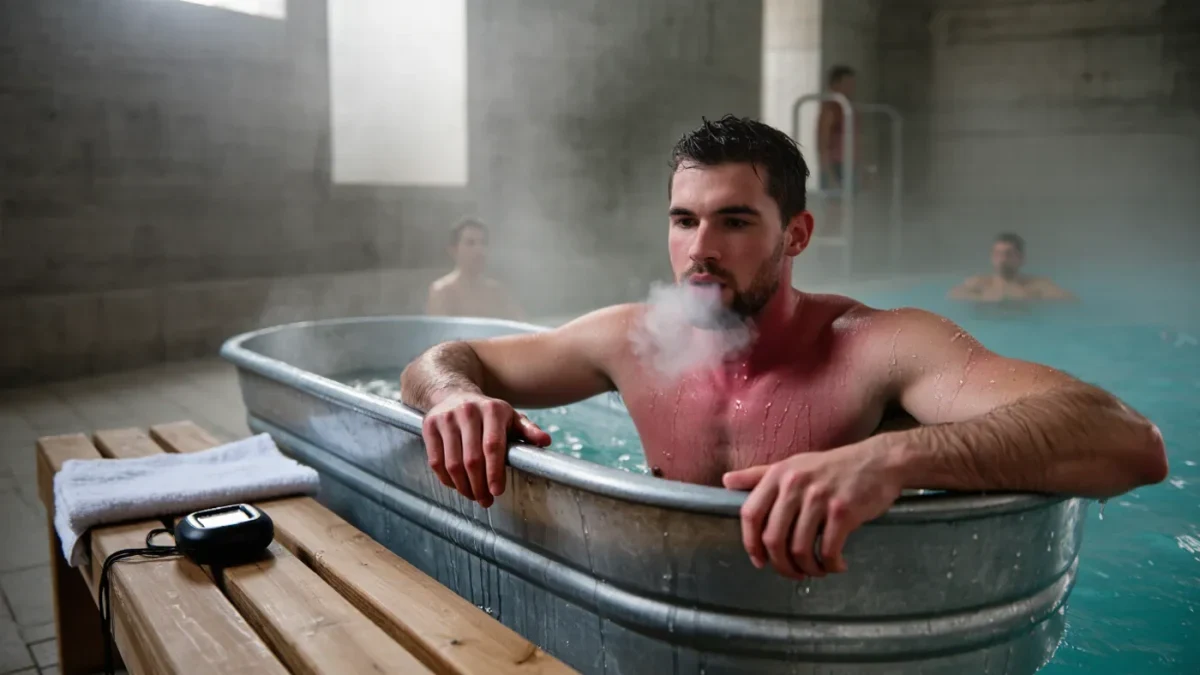
What does cold water recovery actually do? It reduces soreness and the subjective feeling of damage — that part is solid — but it may also blunt some of the training adaptation athletes are recovering to build. Cold-water immersion, typically one to five minutes in water around 10-15 degrees Celsius after exercise, reliably lowers perceived muscle soreness in the research literature, which is why it survived a century in locker rooms. The complication arrived later: studies suggest regular post-workout icing can suppress molecular signaling and long-term strength and hypertrophy gains, meaning the ice bath trades tomorrow's adaptation for tonight's comfort. Like most things in recovery, it is a tool with a bill attached.
A necessary caveat before the details: this article publishes information, not medical advice. Cold exposure carries real risks for people with cardiovascular conditions, and individual responses vary. Anyone considering deliberate cold exposure for health reasons should consult a qualified medical professional first.
Where did the ice bath ritual come from?
From soreness, which is to say from suffering. Cold therapy in medicine descends from RICE — rest, ice, compression, elevation — popularized by Dr. Gabe Mirkin in 1978 as acute-injury first aid, and athletes reasonably extrapolated that if ice helped a sprained ankle, it must help a body beaten by two-a-days. The plunge tub became a toughness theater fixture by the 1990s-2000s: veterans watching rookies shiver, soreness ratings dropping, everyone assuming recovery was happening because misery was. Notably, even Mirkin later revised his own position on ice, acknowledging that inflammation is part of healing and routine icing of injuries may delay it — a rare instance of a protocol's inventor publicly updating against himself.
What does the research actually support?
Three findings with decent consistency. One: cold-water immersion reduces delayed-onset muscle soreness and perceived exertion in the hours and days after hard exercise, compared with passive recovery — the effect is real, which is why tournament athletes and multi-game weeks still use it. Two: the mechanism is mostly about perception and inflammation modulation — reduced swelling, nerve conduction slowing that dulls pain, lowered tissue temperature — rather than any acceleration of actual tissue repair. Three, the awkward one: in several controlled training studies, participants who immersed regularly after strength sessions gained less strength and muscle over multi-week programs than control groups, plausibly because the inflammatory and satellite-cell response to training is not waste to be cleared but the construction crew itself. Freeze the site, slow the build.
So when is cold water the right call?
When the calendar, not the muscle, is the constraint. The defensible use cases are density: tournament weekends, two-games-in-three-days stretches, stage races, travel blocks — any window where being less sore tomorrow matters more than being slightly more adapted next month. Marathoners after a race, soccer players mid-tournament, tennis players between matches — the comfort is functionally valuable because performance now beats adaptation later. The wrong call is the habitual post-every-lift plunge in a normal training block, where the athlete is systematically icing away a chunk of the signal they lifted weights to send. Timing matters too: research and review articles (summarized in sports-medicine sources such as those indexed by the National Library of Medicine) suggest keeping cold exposure several hours away from resistance sessions, or confining it to non-training days.
There is also a middle use case that gets less attention than either extreme: the psychological reset. Athletes routinely report feeling sharper and less mentally drained after a plunge, and over a long season mood and perceived freshness are performance variables in their own right. A veteran deep in the schedule is not really optimizing adaptation from anything — he is surviving it — and if a short bout of cold water makes the next morning's session feel approachable, that trade can be worth it even inside a training block. The honest framing is to know which goal you are serving when you get in: adaptation, freshness, or simply the ability to face another double day. Confusing them is how a tool becomes a habit.
What about whole-body cryotherapy chambers?
Here the evidence thins out considerably. Whole-body cryotherapy — one to three minutes in chambers around minus 100-plus degrees Celsius — became a luxury-recovery industry with prices per session to match, but systematic reviews have repeatedly concluded that its effects on muscle soreness and recovery markers are not clearly superior to much cheaper cold-water immersion, and its long-term safety data remain limited. That is a damning economics result even if the physiology works a little: paying boutique prices for an outcome replicable in a fifty-dollar stock tank and a bag of ice is not a training decision, it is a lifestyle one. Cold, at physiologically meaningful doses, is cold.
Why is the ice bath still everywhere then?
Because soreness relief is immediate and adaptation loss is invisible, and humans discount what they cannot feel. An athlete who ices feels better within the hour and never observes the strength gain that did not happen over six weeks; the feedback loop only runs one direction. Ritual, team culture and the wellness industry reinforce it. The rational playbook is unromantic: use cold water deliberately during congested competition periods, skip it after ordinary strength sessions when adaptation is the goal, prioritize sleep, nutrition and progressive loading for actual recovery — and treat any recovery modality marketed as universally beneficial with the suspicion that phrase deserves.