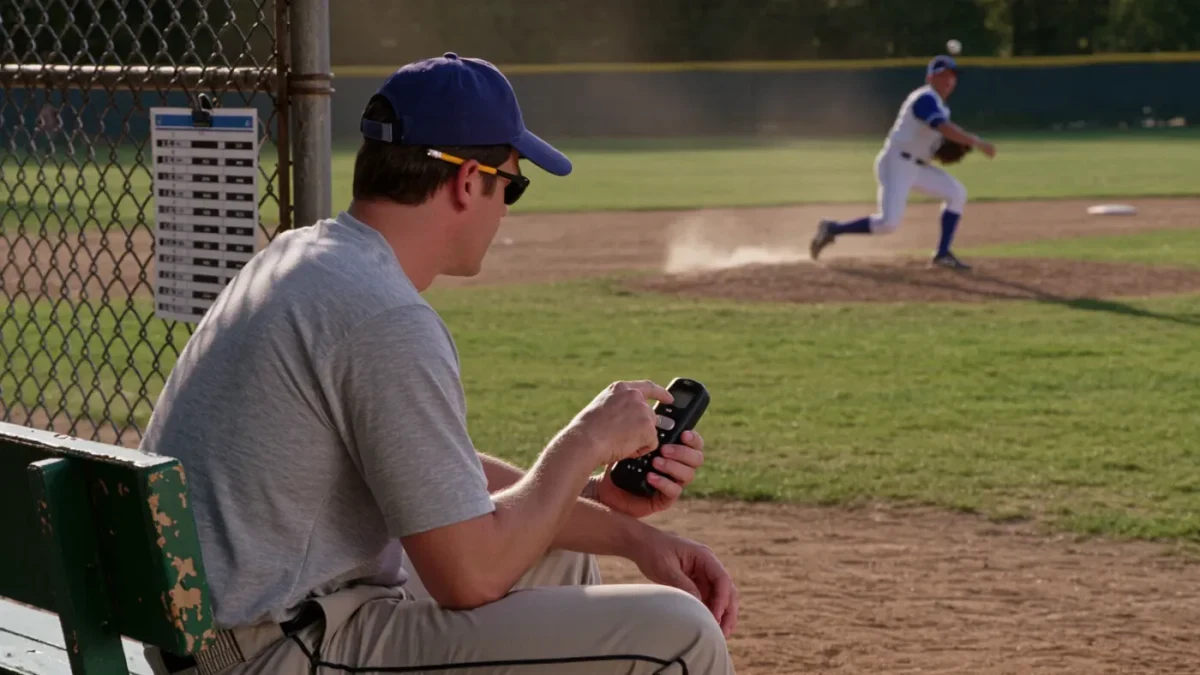
How have pitch counts changed arm care? They turned an invisible accumulation into a managed number — and exposed how little of elbow damage is caused by any single game. USA Baseball and its medical safety committee published pitch-count guidelines as early as 2006, Little League Baseball adopted mandatory limits in 2007, and within a generation the idea that a young arm throws a counted, capped number of pitches moved from radical to routine. At the professional level, teams now manage starters' workloads with rolling pitch and inning targets, six-man rotations and scheduled skipped starts. The result is a sport that finally treats the elbow as a resource with a budget rather than a mystery that occasionally explodes.
Why did pitch counts start with kids, not pros?
Because the damage shows up years later, and youth baseball was where the data became undeniable. The research underpinning the USA Baseball guidelines — most associated with Dr. James Andrews and colleagues at the American Sports Medicine Institute in Birmingham — found that youth pitchers who threw more pitches per game and per year, pitched through fatigue, or threw curveballs early had sharply higher injury risk; adolescents undergoing Tommy John surgery were increasingly common through the 2000s and 2010s. The landmark recommendations that followed are blunt: watch and count pitches, avoid pitching on multiple teams with overlapping seasons, stop when fatigued, and don't have kids pitch and catch in the same day. Youth leagues codified the counting. Pro baseball watched the same arms arrive already damaged.
What does fatigue do to a pitching arm?
Mechanically, everything gets worse at once. As a pitcher tires, shoulder and trunk kinematics drift — elbow extension and shoulder rotation patterns change, scapular control degrades — and force that healthy mechanics distribute across the kinetic chain starts concentrating in the ulnar collateral ligament, the small band of tissue whose failure ends in Tommy John surgery. Laboratory and motion-capture research has documented these fatigue-related mechanical changes for years. Pitchers also lose command and velocity, which is why coaches could observe fatigue decades before biomechanists could measure it: the stuff gets worse before the ligament does. Pitching through fatigue is one of the strongest modifiable risk factors in the entire youth-literature, and it costs nothing to remove.
The counting also changed the conversation on the bench. Before limits, a pitcher's day ended when the manager decided his stuff had gone, and arguments about hooks were fights over gut feel. Now the discussion has a shared reference point that everyone in the dugout — and the stands — can see, which removed a lot of the romantic pressure to leave a kid out there because he is competing. That is an underrated side effect of turning workload into a number: it does not just protect arms from coaches, it protects coaches from themselves — from the decision where pulling a pitcher feels like quitting and the easiest move is one more inning nobody needed.
Did pitch counts fix the Tommy John epidemic?
Honestly? No — not at the big-league level, and the reasons are instructive. MLB Tommy John rates kept climbing after youth limits spread, and researchers point to a paradox: arms protected in games may be overloaded in private training. The travel-ball and showcase economy means many elite prospects throw nearly year-round, with velocity now explicitly scouted and trained from adolescence — radar guns at teenager showcases reward exactly the maximum-effort throwing that stresses elbows most. Pitch counts in games manage only the visible portion of workload; the invisible portion — bullpens, long toss, weighted balls, showcase innings logged across multiple teams — is counted by nobody. Arm care improved the science; the marketplace improved the incentives in the opposite direction.
How do MLB teams manage workloads now?
Less by single-game pitch count than by accumulation modeling. Front offices track rolling pitch totals, high-stress innings (bases-loaded, 20-pitch frames), days of rest and velocity-maintenance trends across a season, adjusting with skipped starts, six-man rotations and shorter outings for young pitchers whose professional and amateur loads they inherited. The five-man rotation with a roughly 100-pitch expectation is itself a historical artifact — four-man rotations and 130-pitch complete games persisted into the 1980s, and their disappearance tracked the rise of relief specialization and injury economics: a starter's elbow is a multi-million-dollar asset, and a GM who burns one has to explain it. Teams also invest heavily in between-start recovery: shoulder-care programs, mobility work, velocity-based throwing schedules and surgical-rehab pipelines that have pushed Tommy John return rates to a majority of pitchers.
What should parents and coaches actually take from all this?
The boring list that the literature keeps validating. Count pitches and honor league limits; treat fatigue as a stop signal, not a toughness test; insist on months off from throwing each year rather than continuous seasons; delay breaking pitches into mid-adolescence while fastballs and changeups build foundation; and be suspicious of any program whose main product is velocity for teenagers. None of this guarantees an elbow — genetics and luck are real variables — but it moves the odds. The entire arc of arm care, from 2006 guidelines to modern workload modeling, reduces to one sentence the sport took a century to accept: the arm does not fail from what it did yesterday, it fails from what it has been asked to do for the last ten years.