A pressing trigger is a specific, repeatable moment that tells a defense to attack the ball together instead of dropping off. Coaching guidance built around defending the final third treats a poor first touch, a pass played square across the back, or a receiver whose body shape is closed off from goal as the standard cues that unlock a coordinated press, according to sportsessionplanner.com. The point is not to chase the ball. It is to make the opponent play the pass the defense wants, at the moment the defense is ready for it.
That distinction matters because most presses fail not from lack of effort but from bad timing. A team that presses on every touch burns legs in the first half and has nothing left for the guardian moments — the last twenty minutes when a mistimed press turns into a three-on-two the other way. The trigger exists to solve that problem: it tells eleven players when to go, so they go together. For related coverage, see Why NFL Teams Hoard First-Round Picks Like Hidden Treasure.
What exactly counts as a pressing trigger?
A trigger is any moment that reduces the risk of pressing and increases the reward. Coaching material on pressing out of possession lists the same handful of situations across most defensive frameworks, according to Elite Soccer: a heavy or backward first touch, a pass played into a wide area where the pitch itself acts as an extra defender, a poor or slow pass across the back line, and a receiver who has to turn his body away from goal to control the ball.
Each of these shares a common feature. They all buy the pressing team a fraction of a second where the opponent cannot immediately play forward. That fraction of a second is the whole trigger. It is not about how close the ball is to goal, and it is not about a scoreboard situation. It is about whether the man on the ball has options in front of him or not.
Wide areas get flagged specifically in that guidance because the touchline removes half the opponent's passing angles for free. A winger receiving with his back to the line has already lost outside support before a defender even closes him down — which is exactly why so many structured pressing sessions build practices around the flanks rather than through the middle.
Why does body shape matter more than proximity?
A defender standing two yards from the ball but facing the wrong way is not actually applying pressure. What matters is whether the presser's body shape cuts off the pass the opponent wants to play, forcing a decision under constraint rather than a free choice.
This is the part narrative-first analysis tends to skip, because it does not show up cleanly on a highlight reel. A well-timed press often looks passive for a beat — a defender jockeying, not lunging — right before it forces the turnover. The eye wants a dramatic sprint and a crunching tackle. The actual mechanism is usually a body angle that closes the safe option and leaves only the risky one.
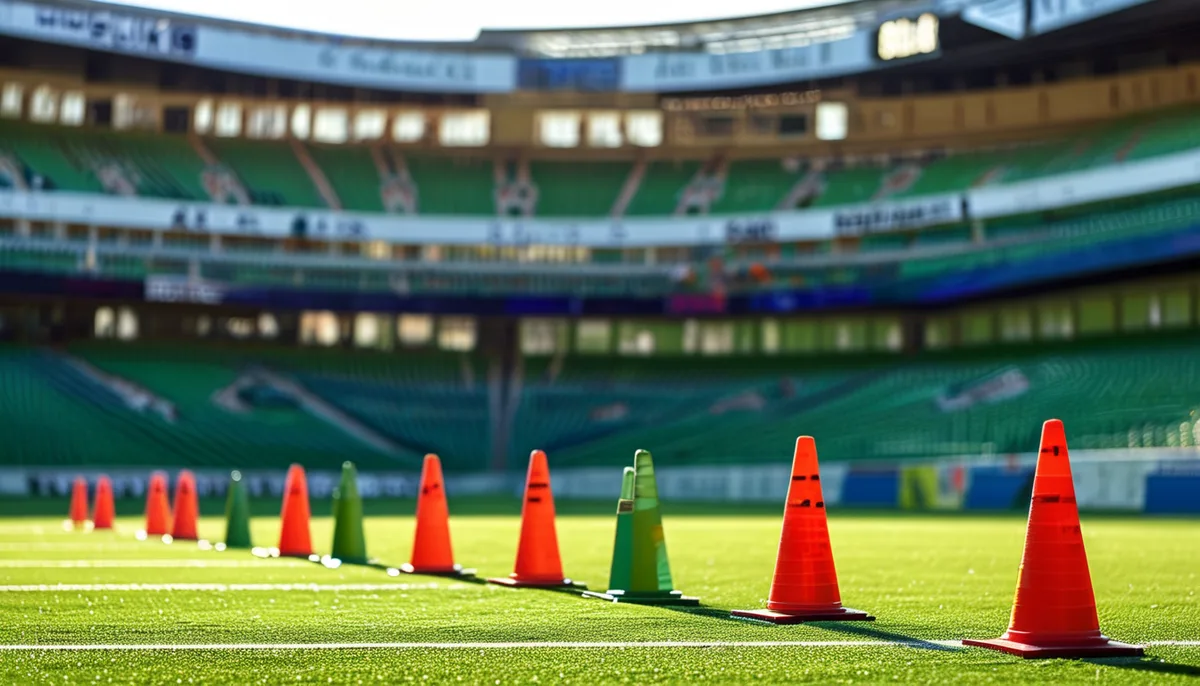
Coordinated pressing sessions built around the final third use exactly this idea: markers define a zone, and the practice trains players to show the ball carrier into a specific area rather than simply chasing, per the session structure described at sportsessionplanner.com. The team decides where the turnover happens before the ball is even played there.
How do teams decide when to commit numbers forward?
Committing bodies forward into a press is a wager. You are betting that the trigger you have identified is real, and that your teammates read it at the same instant you did. If two players go and a third hesitates, the shape breaks and the opponent has a passing lane that did not exist a second earlier.
That is why trigger recognition has to be a team skill, not an individual one. A single aggressive defender reacting to a heavy touch means nothing if the players around him are still shaped for a settled possession. The coaching literature around this treats the trigger less as a single player's instinct and more as a shared cue the whole unit has drilled to recognize together, again per the session design at Elite Soccer.
Practically, that means training sessions isolate one trigger at a time — a bad touch, a square pass, a closed body shape — and repeat it until the reaction is automatic rather than deliberated. Teams that struggle defensively often are not lacking effort. They are lacking a shared trigger vocabulary, so five players react to five different things at five different speeds.
What does a successful press actually look like, and what does a failed one cost?
A successful press ends with either a clean turnover in a dangerous area or a forced pass backward that resets the opponent's attack. A failed press, by contrast, tends to strip out a whole line of players who committed forward and then cannot recover, which is the scenario a structured practice zone is specifically designed to rehearse and correct.
The honest caveat here: neither of the two coaching sources supplied for this piece includes match-level statistical outcomes — no numbers on turnover rates, no comparison of successful versus failed press frequency across a season. That data exists in analytics work elsewhere, but it is not present in this pack, so this piece does not print figures it cannot source. What both sources agree on, structurally, is the mechanism: trigger, angle, commitment, recovery shape if it fails.
That last part — recovery shape — is the piece coaches spend the most time on precisely because it is the part fans notice least until it goes wrong. A team drilled only on the aggressive half of pressing and not on the recovery runs after a missed trigger is a team that concedes exactly the kind of chance a press is supposed to prevent.
What this means for how you watch a game
Turn the commentary off for one half and just watch the identical of the two touches before a team presses. You will start to see the cue before the sprint — the heavy touch, the square pass, the shoulders turned the wrong way — and you will notice which teams press on the cue and which teams press on the ball simply looking loose.
None of this replaces context specific to a league or a single match. A trigger that works against a possession-heavy side built to play through it can be the wrong trigger entirely against a team that thrives on direct long balls, because the whole premise depends on the opponent being uncomfortable receiving under pressure in the first place. Reading the opponent, not just the manual, is still the job.
For readers following how tactical structure interacts with the business side of the sport, our analysis coverage tracks both angles side by side, including how financial rules have reshaped what teams can even afford to build defensively — see How Premier League Profit Rules Quietly Reshaped the Transfer Window. The tactical and the financial questions in modern sport rarely stay separate for long. This connects to our earlier piece, How Premier League Profit Rules Quietly Reshaped the Transfer Window.