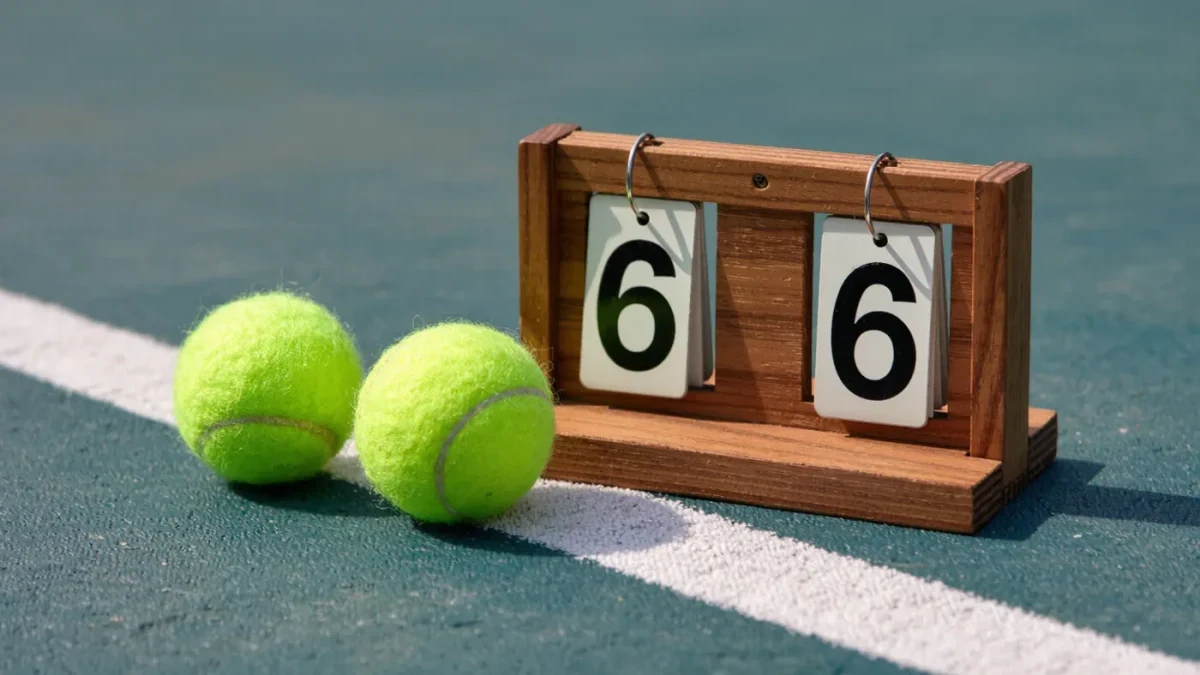
Fifth-set tiebreaks exist because of one match. At Wimbledon in 2010, John Isner and Nicolas Mahut played an 11-hour, 5-minute first-round epic that ended 70-68 in the fifth set across three days — the longest match in professional tennis history. Within a decade, Wimbledon had installed a deciding-set tiebreak, and from 2022 all four Grand Slams standardized the rule: at 6-6 in the final set, players play a first-to-10, win-by-two match tiebreak. The marathon era of Grand Slam tennis is over, and the sport is still digesting what it lost.
How Did the Old Rules Create Marathons?
For most of tennis history, three of the four Slams required final sets to be won by two clear games, with no tiebreak at all. The logic was romantic: the deciding set should be earned, not sprinted. The mathematics were brutal. Because service dominates men's tennis especially, two big servers could hold forever, and games could pile up for hours without a single service break.
Isner-Mahut was the extreme case, but it wasn't isolated. Wimbledon alone staged a 26-24 fifth set in the 2019 final between Novak Djokovic and Roger Federer — a match that ended 13-12 after the new 12-12 tiebreak made its debut in that very final. The sport kept flirting with its own limits.
What Rule Did Each Slam Use Before 2022?
The patchwork was the problem. The US Open had used a standard seventh-point tiebreak in final sets since 1970, making it the outlier of sensibility. The Australian Open introduced a first-to-10 super tiebreak at 6-6 in 2019. Wimbledon added its tiebreak at 12-12 in 2019. The French Open, clay's cathedral of endurance, held out with pure two-game-margin sets the longest. Four tournaments, four answers to the same question.
In late 2021, the four Slams jointly announced a single format effective from the 2022 season: at 6-6 in the deciding set, a match tiebreak to 10 points, win by two. For the first time in the Open era, Grand Slam tennis has one rule for its most dramatic moments.
What Did the Tiebreak Change Strategically?
More than you'd think from a rule worth roughly ten minutes of play. Knowing the tiebreak is coming changes how players manage risk deep in a fifth set: the returner's desperation rises, because waiting for a crack in the server's armor no longer pays off over 20 games. Coaches talk about the last two games before 6-6 as a distinct phase of the match — a compressed version of the old marathon, where nerves, not legs, decide.
It also changed scheduling. Tournament organizers no longer build contingency plans for one match devouring a full day session, a court and three shifts of officials. Draw sheets run on time; night matches start at night. Invisible to fans, enormous for operations.
Was Something Lost in the Trade?
Honestly, yes. The endless fifth set was tennis at its most operatic — a test with no clock and no ceiling, where narrative gravity accumulated with every game. The 70-68 scoreline became folklore precisely because the rulebook allowed it. There is also a fairness argument that tiebreaks add variance: ten points is a small sample in a sport built on margins, and a handful of them can flip matches the old format would have settled more surely on the court's terms.
But the cost side of the ledger was decisive. Players who won marathon fifth sets were routinely ambushed in the next round by opponents who had spent the same day resting. Careers are long enough now, and the physical stakes high enough, that the sport chose mercy.
Do Fifth-Set Tiebreaks Decide Big Titles?
They already have. Djokovic-Federer 2019 was decided by the brand-new rule's first Wimbledon final appearance, and deciding-set tiebreaks now regularly close out Slam matches deep into the second week. The rule once debated as a compromise has become one of tennis's signature stages — the point where a four-hour match compresses into ten points of pure nerve.
The marathons made history. The tiebreaks make deadlines. Tennis, an institution allergic to clocks, finally set one.
How Do the Regular Tours Handle Deciding Sets?
Grand Slams were the outliers all along. On the ATP and WTA tours, men's matches are best-of-three with standard set tiebreaks at 6-6, and doubles has used the first-to-10 match tiebreak in place of a full third set since the 2000s — tennis solved this problem everywhere except its four biggest stages for decades. The 2022 standardization simply brought the majors into line with the format players live in week to week.
The change also aligned juniors, seniors and wheelchair competition with a single grammar of final-set tennis. A sport infamous for its rule fragmentation — different balls, different surfaces, different clocks — now agrees on its most dramatic moment. That alone qualifies as historic.