How does the Olympics decide which sports stay? Through a rolling edit run by the IOC Session, where international federations audition, hosts lobby and nothing is guaranteed. The clearest recent example: at its meeting in Mumbai in October 2023, the IOC added five sports to the Los Angeles 2028 program — baseball/softball, cricket, flag football, lacrosse and squash — while breaking, which had just debuted at Paris 2024, was left off. The Olympic program is not a museum. It's a spreadsheet that gets revised.
Who Actually Votes on the Program?
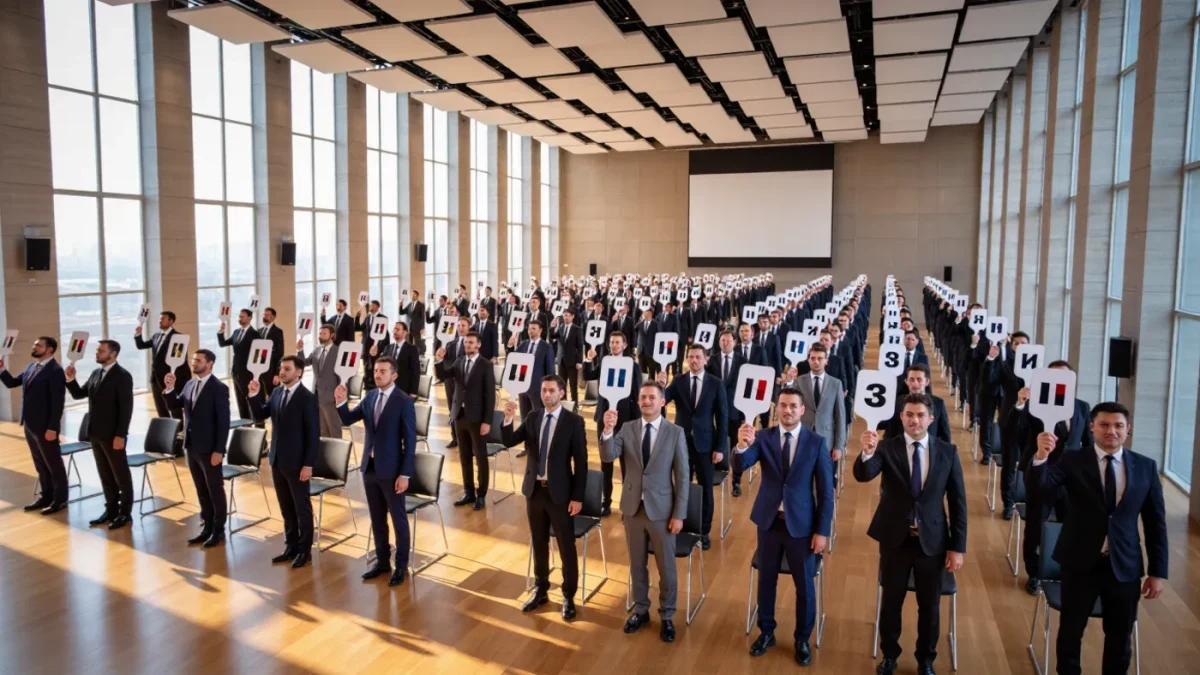
The formal power sits with the IOC Session, the general assembly of IOC members that votes on each Games' event program, usually on the recommendation of the IOC Executive Board. Beneath them sits a layered process: international federations propose events, the IOC's program commission evaluates them against criteria like youth engagement, gender equality, global reach, cost and anti-doping governance, and the host city's organizing committee can propose additional sports for its own edition.
That last lever is the modern one. Under Olympic Agenda 2020, the reforms adopted in 2014, host cities gained the right to propose sports popular in their market — which is how Tokyo 2020 added baseball/softball, karate, skateboarding, sport climbing and surfing, and how Los Angeles landed cricket and flag football for 2028.
What Makes a Sport Olympic in the First Place?
The checklist is stricter than fans assume. A federation must run a genuine global championship structure, meet gender-parity expectations, demonstrate broadcasting value, and — increasingly decisive — pass governance review. The IOC also caps the Games: roughly 10,500 athletes and a fixed quota of events, which means every addition forces a subtraction somewhere. The program is a fixed-size pie, and federations fight over slices with decades-long campaigns.
Squash is the cautionary tale that finally turned: a sport that chased inclusion for multiple bidding cycles, missed out repeatedly, and only broke through for LA28 once the format relaxed and the pitch aligned with IOC priorities.
Why Do Sports Get Dropped?
Three reasons dominate. First, relevance: the IOC wants sports that read as current to younger audiences, which is how skateboarding and sport climbing jumped the queue while karate — added for Tokyo only — disappeared again in Paris. Second, governance: boxing spent years in limbo for LA28 while the sport's old international federation was stripped of Olympic recognition amid refereeing and financial controversies, and the discipline was only secured once a new federation met the IOC's conditions. Third, host fit: baseball and softball left after 2008, returned for Tokyo, vanished again for Paris, and return once more in LA — a sport commuting in and out of the Games on the strength of local demand.
Dropping is rarely a moral verdict. It's arithmetic plus politics plus a television strategy.
Does the System Favor Big or Small Sports?
Both, in different ways. Big sports — athletics, swimming, gymnastics — are untouchable because they carry the Games' audience and history. The flexible space is at the edges, where the IOC experiments: youth-oriented action sports, urban formats, mixed-team events that add medals without adding many athletes. Traditional sports with expensive venues and small TV footprints are the ones permanently auditioning.
The result is a program that looks stable from a distance and is visibly kinetic up close — five sports in for 2028, a boxing crisis resolved at the last responsible moment, and weightlifting's slot renegotiated edition by edition.
What Comes After Los Angeles?
Brisbane 2032 is already in the proposal stage, and the same machinery is running: federations campaigning, the Australian hosts weighing local favorites, and the IOC balancing novelty against tradition. The lesson of the last decade is that no result is permanent. Sports stay by staying useful — to audiences, to hosts, to the Olympic brand.
The rings don't owe anyone a place. Every four years, the list gets rewritten.
What About Events Inside the Sports That Stay?
The editing happens below the sport level too. Even when a federation keeps its place, the IOC and the local organizers negotiate the event list: how many weight classes, which distances, which mixed-team formats. Weightlifting has seen its medal events reduced in recent editions; sport climbing compressed multiple disciplines into combined formats at Tokyo 2020 before splitting them at Paris 2024; swimming, gymnastics and athletics constantly trade marginal events for fresher ones aimed at younger viewers.
This is where athletes feel the program politics most personally: an entire career can be built in an event that a single IOC vote erases, or in a new mixed relay that didn't exist four years earlier. Los Angeles 2028 is planned around a smaller athlete quota than Paris, which means the subtraction pressure runs harder than ever — every addition you celebrate as a fan has a counterpart somewhere in the appendix of the program, quietly going away.